Lesson 6 · 9 min
How the Animals Relate
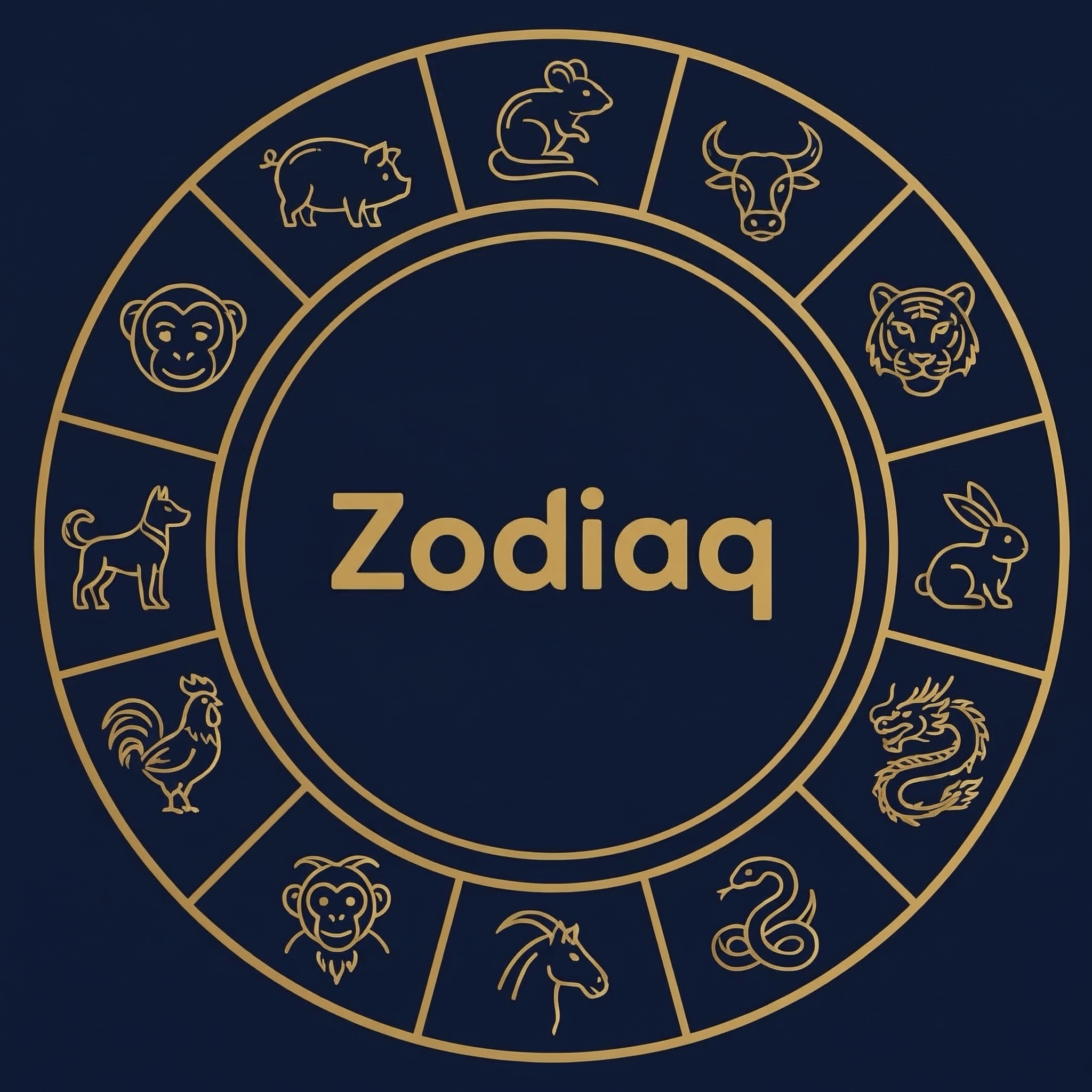
Pairs of branches can combine, share a trine, clash, harm or punish one another. This lesson teaches each relation as traditional meaning, not destiny.
Harmonies
The six harmonies, or Liu He, pair the branches two by two: Rat with Ox, Tiger with Pig, Rabbit with Dog, Dragon with Rooster, Snake with Monkey, and Horse with Goat. Astrologers read these as close, complementary bonds, the strongest friendly link between two branches.
The three harmonies are the trines you met earlier: Rat, Dragon and Monkey; Ox, Snake and Rooster; Tiger, Horse and Dog; Rabbit, Goat and Pig. Two animals from the same trine are read as sharing a direction and working well together.
Each harmony is said to produce an element. Rat and Ox produce Earth, Tiger and Pig produce Wood, Rabbit and Dog produce Fire, Dragon and Rooster produce Metal, and Snake and Monkey produce Water. Horse and Goat are traditionally linked with the Sun and the Moon, and are often read as Fire.
Clashes
The six clashes, or Liu Chong, are the pairs that sit directly opposite each other on the circle: Rat and Horse, Ox and Goat, Tiger and Monkey, Rabbit and Rooster, Dragon and Dog, Snake and Pig. They are six places apart, like opposite hours of the clock.
A clash is read as tension, movement and change. In a chart or a timing reading, astrologers see it as a push to shift something, which can be uncomfortable but is not in itself a bad omen.
A quick way to find a clash is to count. Starting from either animal, count six places around the circle. The Rat is first and the Horse seventh, so they clash. The same count works for every pair.
Harms and punishments
The six harms, or Liu Hai, are subtler frictions: Rat and Goat, Ox and Horse, Tiger and Snake, Rabbit and Dragon, Monkey and Pig, Rooster and Dog. Each harm spoils one of the six harmonies, which is how the tradition explains them.
The punishments, or Xing, come in groups. Tiger, Snake and Monkey form one group. Ox, Goat and Dog form another. Rat and Rabbit punish each other. The Dragon, Horse, Rooster and Pig are said to punish themselves when doubled. Punishments are read as strain that comes from within a situation.
Reading relations wisely
Some pairs carry more than one label. The Tiger and Monkey clash and also share a punishment group, and the Snake and Monkey combine yet also share one. When Zodiaq names a single relation for a pair, it checks in a fixed order, combination first, then clash, trine, harm and punishment, and reports the first that applies. Pairs with none of these are neutral.
In this tradition, relations describe the texture of a connection, not its outcome. A clash between two people's year animals says nothing about whether they will get along. It offers a theme to reflect on.
Relations also matter for timing. Readers compare the branch of a new year, month or day with the branches of a chart. When the year's branch clashes with a person's year branch, for example, the tradition reads that year as one of movement. Zodiaq uses the same relations in its Timing readings.
Key terms
- Liu He
- The six harmonies: six pairs of branches read as close, complementary bonds.
- Liu Chong
- The six clashes: pairs of branches directly opposite each other, read as tension and change.
- Liu Hai
- The six harms: pairs read as subtle friction, each spoiling one of the harmonies.
- The punishments: groups of branches read as inner strain, including self-punishment.
- Neutral pair
- Two branches with no combination, trine, clash, harm or punishment between them.
Worked example
Relations in the teaching charts
Start inside Maya's chart. Her year branch is the Monkey and her day branch is the Tiger. The Zodiaq engine names this pair a clash. Her month branch, the Rabbit, and hour branch, the Goat, share the Wood trine, so the engine names that pair a trine. Her Monkey and Rabbit have no relation, so that pair is neutral.
In Jun's chart, his Tiger year and his Dog month share the Fire trine. His Dog day and Dragon hour sit opposite each other, so the engine names that pair a clash.
Now compare the two samples. Maya's year animal is the Monkey and Jun's is the Tiger, so their year animals clash. An astrologer would read that as a lively, challenging theme between them, not a verdict. In the exercise, you will name the relation between two animals in the same way.
History and traditionRelations in practice
The harmonies, clashes, harms and punishments appear throughout the classical fate calculation manuals, where they are used to read how the pillars of one chart interact and how a chart meets each new year, month and day.
In everyday life they show up in almanacs, which list each day's clashing animal, and in matchmaking customs in China, Korea and Vietnam, where families once compared the year animals of a couple. Many families today treat such comparisons lightly, as one cultural thread among many.
Try it: Name the relation
You will see two animals. Choose whether they combine, share a trine, clash, harm, punish, or are neutral.
Round 1 of 5
Check your understanding
Question 1 of 5
Think about it
Think of a close relationship that has some friction in it. Has that tension ever moved things forward for you both?